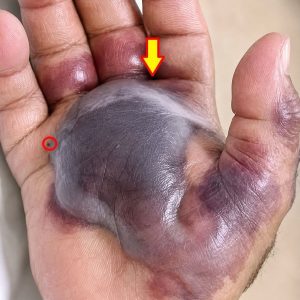
The skin serves as the body’s natural protective barrier, helping prevent bacteria and other microorganisms from entering deeper tissues. When a cut, scratch, puncture, or insect bite breaks that barrier, bacteria sometimes find a way inside. Most minor injuries heal without complications, but an infection can occasionally develop. Early warning signs may include redness that continues spreading, increasing swelling, warmth around the wound, and pain that becomes worse instead of gradually improving.
One particularly concerning change is a red streak extending away from an infected area. This can sometimes indicate inflammation involving the lymphatic vessels, known as lymphangitis, and warrants prompt medical assessment. Fever, chills, swollen lymph nodes, or feeling generally unwell may accompany a spreading infection. Not every red mark indicates a dangerous condition, but rapidly worsening symptoms should never be ignored. Severe illness, confusion, or rapidly progressing skin changes require emergency medical attention.
Fortunately, caring for minor skin injuries is usually straightforward. Wash your hands before touching the wound, rinse the affected area with clean running water, gently clean the surrounding skin, and cover it with a clean dressing when appropriate. Change the dressing whenever it becomes wet or dirty. Avoid repeatedly applying harsh chemicals that may irritate healing tissue. Deep punctures, animal bites, heavily contaminated wounds, or injuries involving retained foreign material may require professional care and an assessment of tetanus vaccination status.
People with diabetes, poor circulation, or weakened immune systems should be particularly careful because even small injuries can sometimes become complicated. The most important thing is to watch whether a wound is improving or deteriorating. A little tenderness immediately after an injury may be normal, but increasing pain, spreading redness, pus, or fever deserves attention. In the gardening example, the person reportedly recovered after receiving appropriate antibiotic treatment. The experience illustrates why noticing a change early can make a meaningful difference.



This Post Has One Comment